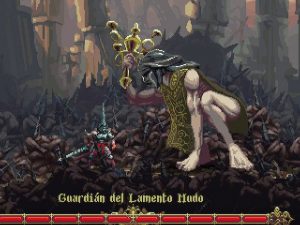

Blasphemous is a recent indie video game made by the developer The Game Kitchen, and so far I’m really enjoying it, especially for its incredibly grotesque combat and because it seems like a challenging game, which is something I’ve always liked.
But as with most games, it’s easy to have questions at the start. The kind of stuff it’d be good to know right from the beginning, and that the game probably either doesn’t tell you or only explains vaguely. That’s why I decided to put together this list of Blasphemous tips with all the useful things I’ve learned.
So, with that said, let’s get to the tips:
Table of Contents
What Tears of Atonement Are and What They’re For
Tears of Atonement are basically the game’s currency, like Geo in Hollow Knight or souls in the Dark Souls trilogy. You’ll collect them as you defeat enemies and, unlike in the games I just mentioned, you won’t lose them when you die. Blasphemous works differently, but I’ll talk about that a bit further down.
With this currency you can upgrade Mea Culpa (the Sword of the Penitent One, the protagonist) to get new skills or improve the ones you already have, which is obviously going to help your character progress a lot.
What Happens When You Die in Blasphemous?
Death in this game is a bit Dark Souls-style, but it’s been tweaked into something completely different. As I mentioned before, you won’t lose your Tears of Atonement when you die… but… does that mean there’s no penalty for dying? Of course there is!
When you die, the Penitent One leaves behind a Guilt Fragment. It’s basically a sort of representation of the guilt the protagonist feels for having died in that spot, and it’ll stay there forever unless you go and get it.
While one of these Guilt Fragments is out there, the Penitent One will get fewer Tears of Atonement, which is no fun at all. On top of that, your Fervour bar, which is basically the game’s magic bar, will also shrink, which isn’t fun either.
These fragments can stack, making the penalty bigger and bigger, so always try to recover them. The problem is that sometimes it’ll be completely impossible to reach them (for example, if the fragment ends up on some spikes, those darn stairs… I wonder if anyone knows what I mean), so you’ll have to turn to another, more hidden method.
How to Cleanse Your Guilt
Besides going back to the Guilt Fragment, there’s another method. You’ll need to go to a specific area of the game called “Mercy Dreams“, where you’ll find a huge statue that looks like it’s praying (a Confessor Statue). Interacting with it lets you cleanse your guilt.
To get there, you need to head to the “Wasteland of the Buried Churches”, an area you’ll reach very early in the game and one you’ll most likely pass through, unless you discover a secret path in Albero that takes you another way (a hidden breakable wall in Albero, all the way down on the left).
Once you’re in the Wasteland, go all the way to the right side of the area, where you’ll find a room with several paths. Take the path on the right, the lowest one. Keep going that way and you’ll end up reaching Mercy Dreams.
This service costs 200 Tears of Atonement for each guilt you’ve stacked up. It’s not that much and it’s well worth it, since at the end of the day it’ll make you earn more Tears.
What About Parrying?
Parrying is very similar to the Souls games: when you do it, you block an attack for a very brief window of time, and sometimes you’ll be able to pull off a pretty powerful counterattack in response.
What makes Blasphemous special here is that sometimes, when you counterattack, you’ll see the enemy get stunned and start flashing red. At that moment you can perform a brutal execution that finishes enemies off in a truly grotesque way. It’s awesome.
There’s No Fall Damage
So far there doesn’t seem to be any kind of fall damage in Blasphemous. I’ve fallen from pretty high places and never taken any damage when I hit the ground. That doesn’t count areas specifically designed with falls that kill you because there’s no floor, obviously.
How Do I Level Up Mea Culpa?
I already talked about this in the post on Mea Culpa Upgrades and Skills, but I’ll give you a quick summary anyway. Basically, you need to find the Mea Culpa Shrines. Every time you find one, your Sword goes up a level, which lets you get new skills or upgrade the ones you already have even further.
You’ll find the first shrine in Albero, an area you’ll reach shortly after defeating the Warden of the Silent Sorrow. You can’t miss it.
What Order Should I Follow in Blasphemous?
Blasphemous is a metroidvania and it’s designed so you can tackle things in whatever order you want. That said, there’s still a specific route that makes the most sense.
One of the first NPCs you run into in the game actually tells you this. This would be the right order of areas:
- Snowy Mountain.
- The Church.
- “The bell that grows into the earth.” That’s more or less what the guy says.
Anyway, I’ll cover this topic in more detail another day.
Is It a Hard Game?
So far it does seem like it. It’s not like I’d finished it at the time of writing this post, but from what I’m seeing it’s definitely a game that poses a challenge. For now I wouldn’t put it on the level of Hollow Knight or a Souls game in terms of difficulty, but hey, maybe I’ll change my mind once I’ve seen everything there is to see. When that happens I’ll definitely write something or maybe update this section; we’ll see what I feel like doing.
And that’s it! I’ll probably keep thinking of more things to add, but for now I’m sure these tips will help you a lot in your playthrough.
What do you think of Blasphemous? Want to share any tips with other readers? Have you had to go to Mercy Dreams? Leave a comment!